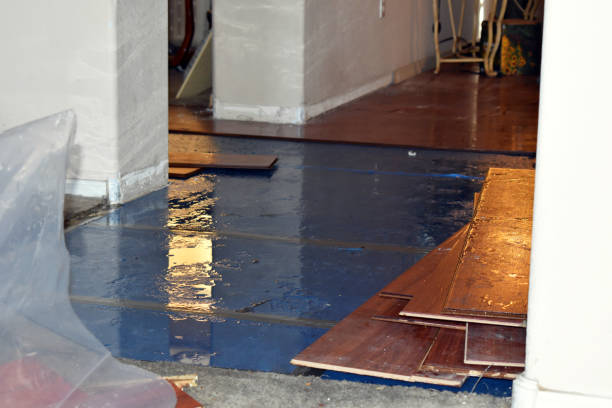
Flooding that spreads beyond one room needs a zoned strategy, not a single crew working room to room with no plan.
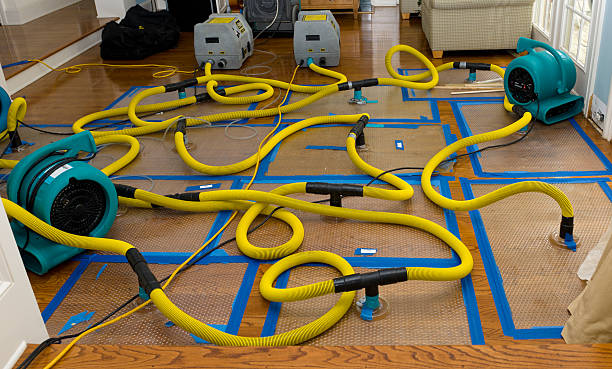
We map affected zones across the whole structure so drying equipment gets placed by priority, not by whichever room is closest to the door.

We assess every impacted room and level before deciding equipment placement, not just the first room we see.
Our Fort Hood, TX technicians cut drywall at a measured line above visible water damage, not an arbitrary height.
Drying equipment is allocated by zone priority — the most saturated areas get equipment first.
Containment barriers separate affected zones from unaffected parts of the Fort Hood, TX property during the job.
A flood that spans multiple rooms needs more coordination than a single-room leak, and here's how our Fort Hood, TX crews structure that response.

A full assessment identifies every zone before any drying plan is finalized.
Flood-cut precision limits repair scope to what actually needs replacing.
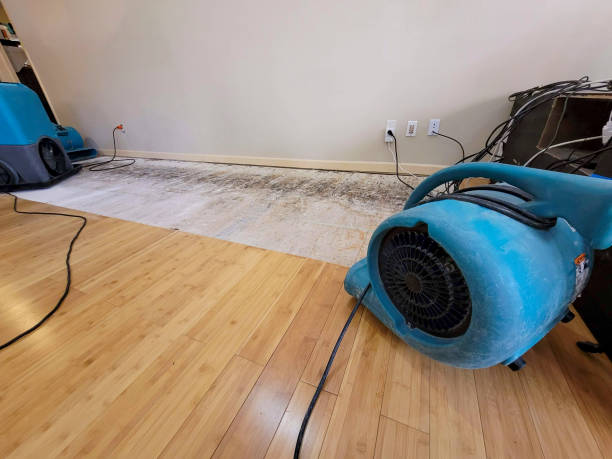
Air movers and dehumidifiers are placed according to a zone map built from the initial assessment.
Content restoration runs in parallel with structural drying to save time.
We isolate contaminated zones from clean areas throughout the job.
Post-flood treatment reduces the chance of mold taking hold after the structure is dry.
Describe the scope of flooding so we can determine how many crews to send.
Multiple technicians arrive when the reported scope calls for it, not just one truck.
You'll see the full zoned plan and cost before drying begins.
Zone-by-zone verification backs the final sign-off.

"Our whole first floor flooded from a burst supply line and they had a plan mapped out within the first hour, not just people running around." — Yolanda P.
"They kept the flood contained to the affected rooms instead of letting it spread through the whole house during drying." — Trent H.
"Flood-cut work was precise — they only removed drywall where it was actually wet, not the whole wall." — Simone A.
Multi-room floods require zone mapping and crew scaling that a single contained leak doesn't need.
Only material confirmed wet by moisture readings gets removed, not the entire wall.
Containment barriers and controlled airflow keep the drying zone isolated from clean areas.
Timeline scales with scope — a two-room flood dries faster than a whole first floor.
We handle both — content triage and restoration run alongside structural drying.
Our zone-based approach extends across levels, with each floor assessed and mapped separately.
Fort Hood is within our full-scale flood response zone, backed by regional equipment reserves.

One call gets the right-sized crew routed to Fort Hood.
Call +1-844-833-1325